|
Margaret Mead, anthropologist To download our bimonthly newsletter, the Compass, just click on "COMPASS" in the above menu! You can download a pdf of most every issue dating from the year 2000 right up to 2010, including the most current issue, July/August 2010. CHICAGO'S LINCOLN PARK ALERT: BLACK-CROWNED NIGHT-HERONS
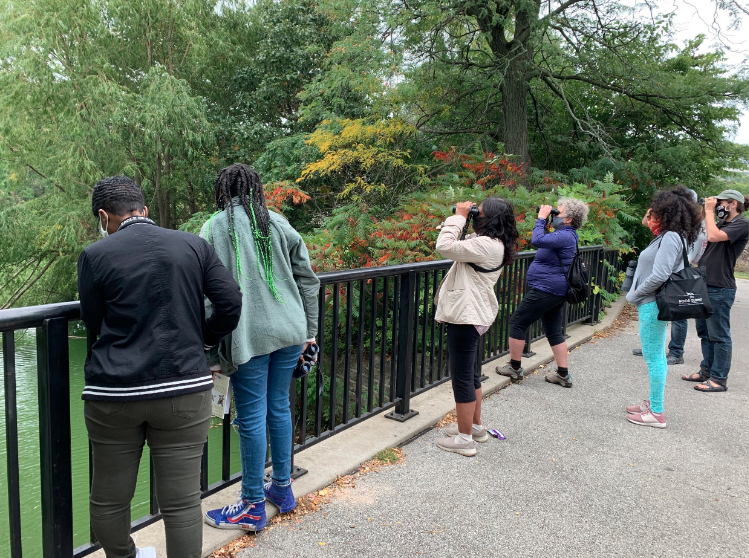
Federally protected Black-crowned Night-Herons – an endangered species in Illinois – are nesting south of the Lincoln Park Zoo’s South Pond. Young birds leave their nests and land on grassy areas, benches and paths below trees in this part of the Chicago Park District. Signs and fencing are attempting to provide awareness and a buffer zone for these young birds that are vulnerable while on the ground. Always follow city ordinances to keep your dog on leash. Do not allow your dog or children to approach these birds. Be aware that causing harm to one of these birds is a serious offense. Contact the Lincoln Park Zoo or Chicago Bird Collision Monitors (773 988 1867) if you have a concern for the welfare of one of the Black-crowned Night-Herons. It is a privilege for Chicago to provide a home for these birds. Please give them a chance to grow up safely and undisturbed. ENVIRONMENTAL DISASTER- The Gulf Coast Oil Spill: How to Help Important Message From National Audubon— Here’s what you can do locally: If you normally feed birds, whether in your backyard or on a windowsill or a patio, National Audubon is asking that you keep feeding the birds throughout the summer and all through fall migration. If the birds begin their fall migration journey with added body weight—which gives them added energy—they may not need to stop over and re-fuel as they normally would in the damaged areas of the Gulf. They may be able to make it all the way to South America without stopping. This is an extremely important request from National Audubon. Your efforts are essential to its success! Please pass the word to everyone you know and ask them to pass along the message. The response to National Audubon's call for volunteers has been enormous. Over 1,000 people a day are being added to the volunteer rosters. We encourage everyone who is interested to please sign up immediately because maintaining a large pool of potential volunteers is very important to the success of the organizational needs in the Gulf coast area. Also, please be patient. National is in the process of sorting out the various types of volunteer skills that will be needed and matching them to people who will be available. It is very important that potential volunteers not travel to the Louisiana Gulf areas on their own. Please wait until you are contacted. Your participation in the sign-up process is essential and there will also be opportunities to participate in long-term restoration efforts. We are including sign-up opportunities offered by other organizations. The more places you have signed with, the better your chances of being called into service. Audubon Volunteer Sign-up and How to Help: www.audubonaction.org/SpillResponse National Wildlife Federation Volunteer Sign-up: www.nwf.org/Oil-Spill.aspx Coalition to Restore Coastal Louisiana: www.crcl.org Deepwater Horizon Unified Command (through World Wildlife Fund): www.deepwaterhorizonresponse.com Cornell Lab of Ornithology How to Help: www.ebird.org/content/ebird/news/survey-gulf-coast-birds US Fish & Wildlife with National Audubon and TriState Bird Rescue & Research: www.tristatebird.org The Ocean Conservancy: www.oceanconservancy.org/site/PageServer?pagename=program_gulfdisaster The Nature Conservancy: www.nature.org/wherewework/northamerica/states/louisiana/volunteer/art31619.html State of Louisiana Volunteer Service: www.volunteerlouisiana.gov State of Mississippi Volunteer Service: www.mcvs.org State of Alabama Volunteer Service: www.211connectsalabama.org State of Florida Volunteer Service: www.volunteerflorida.org Environmental Defense Fund: www.edf.org National Resources Defense Fund: www.nrdc.org National Audubon anticipates volunteer activities will include: • Volunteer Response Center Staff: Scheduling volunteers, identifying and coordinating engagement with new projects, logistical support, arranging training, office management, etc. • Coastal Bird Survey: Collecting data and photos on bird resources and impacts across the coast according to specific scientific protocols. • Wildlife Transport Facilitator: Assisting USFWS and Tri-State Bird Rescue with volunteers scheduled in round-the-clock shifts in key locations for injured/oiled wildlife recovery and transport operations throughout the coastal region. • Bird Capture and Rescue Materials: Volunteers are needed to make nets, cages and other materials to assist trained professionals in oiled bird rescue efforts. • Citizen Science Monitoring: Submitting electronic information on birds sightings at Important Bird Areas, refuges or sanctuaries to assess population impacts, numbers of target species or species of concern • Bird Hotline Operators: Providing on-site bird expertise for our Volunteer Response Center as well as possibly in field offices of BP, Tri-State Bird Rescue and others involved in response efforts to address issues related to bird sightings, handling, species identification, etc. Audubon has been working for the health of the Gulf for years. We can help volunteers to make a difference now, when it's needed most. Together we can help the region grow even stronger long after the headlines fade. To follow more of National Audubon efforts, go to Audubon on Twitter and Facebook. BIRDATHON 2010! (It's never too late to donate!) Saturday and Sunday. First things first: many thanks to all who birded, pledged or otherwise supported the efforts of the four teams that competed in the Chicago Audubon Society Birdathon during the past weekend. The combined teams tallied 177 species in Cook County over the two-day period. As usual, each team manged to locate species found by no other team. The teams, in order of finish: For a list of species seen click here. COOK COUNTY SPRING BIRD COUNT RESULTS - May 8th, 2010 Compiled by CAS Research Committee Chair Alan Anderson, you can access a pdf with all of the data, observers and species totals by clicking here. Thanks go out to all who participated! CITY OF CHICAGO "BIRD'S-EYE VIEW" WEBSITE The City of Chicago's Department of Environment put together a great birding website, with text in both English and Spanish. Educational materials, helpful links, and more! CAS has "inherited" the site and, with the help of Greg Neise (founder of the Illinois Birder's Forum), we will continue to make this site available to the public. There will be updates along the way, so check back from time to time at: We'd like to thank Sarah Abu-Absi of the DOE for offering this site to the environmental community! WOODED ISLAND BIRDWALKS Chicago's Jackson Park. Bring binoculars, field guides, and dress for the weather. Many species of songbirds and water birds are seen. Meet at Clarence Darrow Bridge, just south of Museum of Science and Industry. Directions to Darrow Bridge: From Lake Shore Drive turn west on Science Drive, which is the stop light at 5800 South. Turn left at the stop sign. Travel through the parking lot to the west end where you'll find Darrow Bridge. Parking is free, as are the birdwalks. Questions? Contact Pat Durkin at pat.durkin@comcast.net. All levels of birders are welcome! Birds of Chicago by Chris C. Fisher and David B. Johnson
Birds of Chicago is the perfect lightweight easy-to-carry volume intended to serve as both a bird identification guide and a bird appreciation guide and presents a balance between the familliar and the noteworthy--an excellent companion whether you are on a birdwalk or just a stroll through the park. Price: $15 (includes postage). To order over the phone, call the Chicago Audubon office at (773) 539-6793 or send a check to: Chicago Audubon Society 5801-C North Pulaski Road, Chicago, 60646. CONGRATULATIONS TO OUR AWARDEES! On Thursday, November 5, Chicago Audubon held its Biennial Environmental Awards Banquet at the Silver Stallion Restaurant in Des Plaines to honor those who have made contributions to conservation and birding in the Chicagoland area. The Chicago Audubon Board of Directors chooses final Award recipients. For a list of past recipients click here.
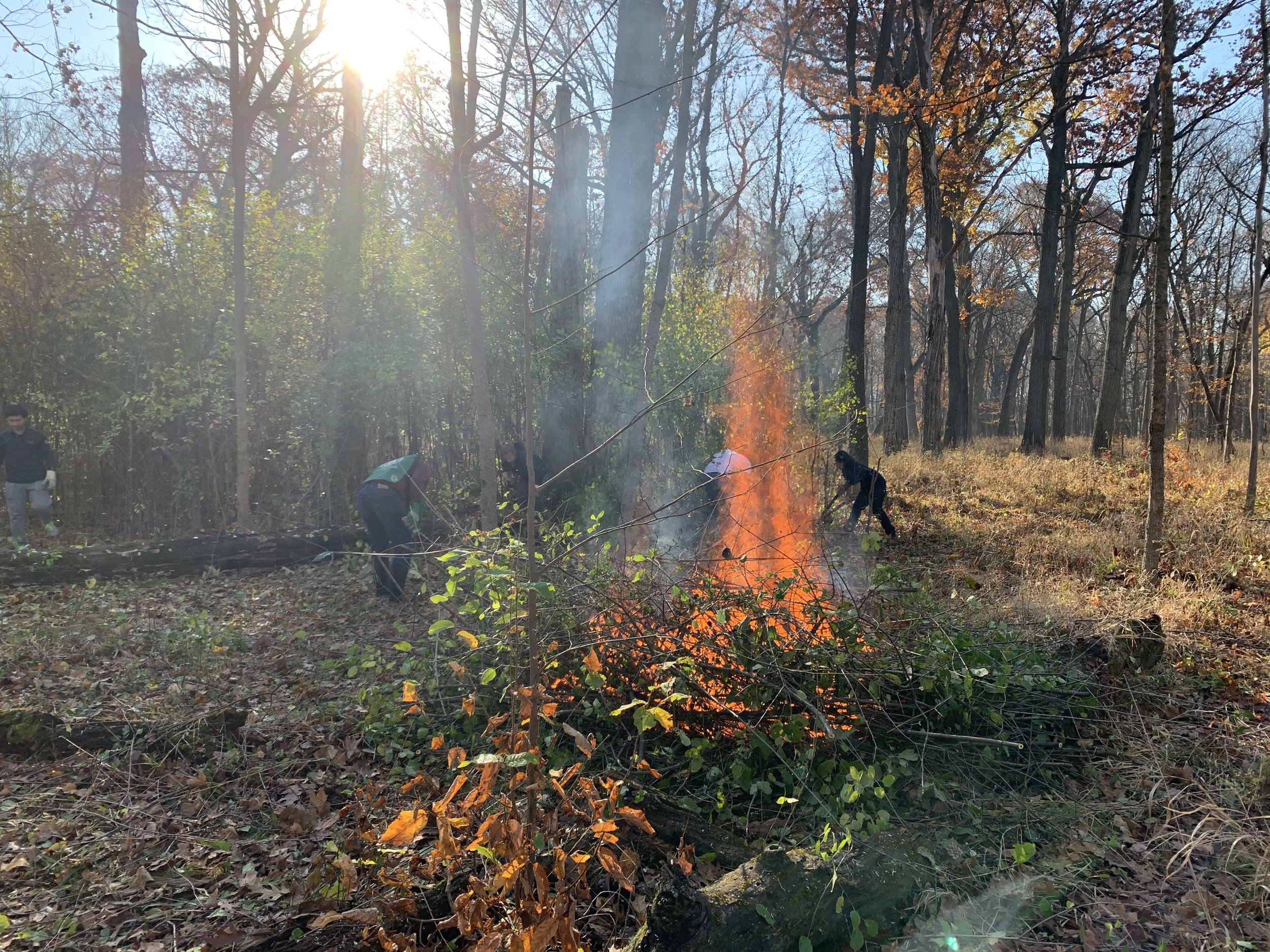
- Richard Biss, who managed the CAS Rare Bird Alert for more than 25 years - Carol Nelson, who served on the CAS Board of Directors, on the Conservation Committee, - Doug Anderson, our longest serving board member ever (since 1973), who also led bird walks at Jackson Park’s Wooded Island for more than 30 years. CAS Hotline Highlights! Among our honorees at the recent CAS Awards Banquet (see below) was Richard Biss, who managed the CAS Rare Bird Alert for over 25 years. For some after-dinner entertainment he put together a collation of "highlights." Some commentary from Rich: "Some of it is difficult to understand, as the recordings are old and were on microcassette tapes. Its amazing how the technology has changed over the years from huge bulky tape machines, to smaller tapes, to microcassette tapes, to digital. Laurie Binford is the person giving the funny Botanic Garden Reports. The first message was the first message that I received when running the hotline. It was from Jim Landing, who jokingly started with saying my voice was sexy! At the end of the recordings is Jim Landing leaving a difficult to understand but funny message from his dog Bull, which I assume many of you may remember. Chris Williamson (Phillips then) has her ovenbird central message, and Dave Johnson give his rendition of Summer Tanager from Jack Benny Center of the Arts in Waukegan. Danny Diaz saw the injured Warbler (not really injured, but the name was funny), and there are a few other people who may recognize someone on the recording." The mp3 file of the "Highlights" can be listened to by clicking here. Thanks again, Rich, for 25 years of great work! SKOKIE LAGOONS WORKDAYS 10:00 a.m. every second Saturday of the month. Continuous throughout the year. The Chicago Audubon Society sponsors regular monthly workdays at Skokie Lagoons every second Saturday of the month. Activities include buckthorn cutting, brush pile burning, and other management activities. Wear work clothes. Meet at the Tower Road parking lot, east of the lagoon bridge. For further information, please call Dave Kosnik at (847) 456-6368. Everyone is welcome! MONTROSE POINT MAGIC HEDGE STEWARDSHIP WORKDAYS Workdays to be held on the following Saturdays: LIGHTS OUT!!! Now that spring migration is here, our nationally-known program, Lights Out! also resumes. With the cooperation and support of the Mayor's Nature and Wildlife Committee and the Building Owners and Managers Association of Chicago (BOMA), lights in many of downtown Chicago's tall buildings are turned out during the overnight hours in order to avoid attracting migratory birds, which can otherwise become disoriented and crash into the buildings. For more information, please click here! VOLUNTEERS NEEDED TO HELP SAVE THE BIRDS! Chicago Bird Collision Monitors (CBCM) is looking for volunteers to assist in their conservation and rescue efforts for migratory birds in downtown Chicago and outlying areas. Help rescue the birds! For further information, please call (773) 988-1867. BOOK REVIEW: Birdwatcher, The Life of Roger Tory Peterson
Author: Elizabeth J. Rosenthal Imagine floating down a river and telling your companion that you would expect to find a peregrine falcon under the approaching bridge. Upon drifting under said bridge, a single feather floats down into your lap and you exclaim “a marbled godwit!” and look up to find the expected peregrine enjoying breakfast. This exemplifies the birding genius of Roger Tory Peterson. (Can you identify a marbled godwit via a single feather?) In her recently published biography, Birdwatcher: The Life of Roger Tory Peterson, Elizabeth J. Rosenthal presents a comprehensive study of his life and multiple accomplishments. Peterson was a pioneer in so many areas we accept as common realities today and he was such an inspiration to children and novice bird and nature enthusiasts. Any opportunity to teach children about the great outdoors excited him and he revolutionized nature guides to make them more user-friendly for the uninitiated as well as for the more experienced explorer. Bird guides before Peterson’s time were lengthy tomes—too heavy and too verbose to be of much use in the field. Peterson brought the birds to life with his excellent paintings and descriptions of diagnostic traits and was one of the driving forces in making “birdwatcher” a common term. Peterson was also a father of the environmental movement. He was among the first to point out how birds helped to control insect populations; how DDT was affecting the nesting success of raptors; and how stands of dead trees were important as nesting habitat for certain bird species. Peterson did not limit himself to the United States. He helped found the World Wildlife Fund to raise money for conservation. Rosenthal writes of how Peterson’s British and European guides changed birdwatching in Europe forever. He did the same thing for Canada and for East Africa and he traveled the world, influencing the conservation discussion and enhancing enjoyment of nature wherever he went. In addition to his bird guides, Peterson published books on wildflowers, mammals, butterflies, shells, trees, rocks, minerals, amphibians and reptiles. His history is fascinating and I have touched on just a tiny portion of it in this review. It is hard to believe one person could accomplish so much in a lifetime. Peterson had a favorite phrase that he quoted often in his speeches, “Birds are the most eloquent expression of reality.” This belief obviously drove the man and his passion. Please visit the author’s website at www.petersonbird.com for additional information about this well researched book. OPPORTUNITIES FOR NEW CAS BOARD MEMBERS The downside to the departure of Christine and Stephen Lee to their new Colorado home is that it leaves us with openings on the CAS Board. We're looking for people with a passion for nature who want to "act locally." If you're interested in being nominated for the Board please contact Joe Lill at 773-631-3154 or trptjoe@aol.com. <TIPS FOR BIRD IDENTIFICATION People have different approaches to bird watching and bird identification. Here are a few tips to help the new birder remember details before reaching for the guidebook. This information is meant to be a general guide and even if ... READ MORE>> ADDITIONAL BIRD SAFETY INFORMATION Continuing our efforts to supply our readers with bird safety information specifically related to the problem of birds pecking at windows, we hope the following will also be helpful. Birds will often mistake their own reflection ... READ MORE>> Make Your Windows Safer for Birds The Chicago Audubon office receives calls every spring from many people concerned about the bird that is “trying to get through the window.” Of course, the bird is only reacting to its own reflection in the glass. Hopefully, this article will answer many questions about this important problem -- including the most important question of all, “How do I keep the bird from injuring itself?” ... READ MORE>> All Creatures Small and Smaller When we come across a baby bird, squirrel, or rabbit, (to name just a few), our first instinct is to rescue it – a very understandable and very human reaction. However, chances are you shouldn’t try to rescue it – at least not immediately. Many animals leave their babies for extended periods of time ... READ MORE>> |
![]() Ovenbird in the snow Photo by Alan Anderson ![]() Click to view Larger The Harrier Hat The CAS hat, featuring a Northern Harrier, is now available for only $15.00 (add $3.00 for shipping). Great colors, solid stitching, an adjustable band. Contact the CAS office at (773) 539-6793 or cas@chicagoaudubon.org
|
|
HOME | CALENDAR | ABOUT US | CONTACT US | MEMBERSHIP | COMPASS | LINKS | SEARCH
©2001-2005 Chicago Audubon Society Site Developement by MataMedia |
|